

Table of Contents
- Why Unique Presents for Children Under Ten Beat Another Plastic Toy
- Gift Ideas for Children Under 10: Picks by Age and Interest
- Educational Gifts for Kids: What Actually Teaches Something
- Non-Toy Gifts for Kids Who Already Have Everything
- Gifts for Kids by Age: A Quick Selection Framework
- Safety, Suitability and Low-Clutter Choices Parents Appreciate
- What to Ignore When Buying Unique Presents Online
- Frequently Asked Questions
Last Updated: October 7, 2026
Why Unique Presents for Children Under Ten Beat Another Plastic Toy
Walk into any toy shop and you'll see rows of plastic, most of it broken within a month. That's why so many gift-givers hunt for unique presents for children under ten instead.
The best unique presents for children under ten match a child's current stage, not their birthday number alone.
Below, we break the under-ten years into three stages, then cover educational picks, non-toy options, safety and low-clutter choices.
Raising Children Network guide to child development
Gift Ideas for Children Under 10: Picks by Age and Interest
Age tells you roughly what a child can handle; interest tells you what they'll actually reach for.
A quick word on budget. Under-ten gifts fall into three tiers: under $20 for add-ons, roughly $20 to $45 for a main present, and $45 and up for a milestone gift.
12 to 24 Months: Sound, Texture and First Words
At this stage, cause and effect is the whole game. The Little Dutch Wooden Sound Puzzle - Little Farm ($36.95) puts seven animals and a tractor into a chunky wooden board, and each piece plays a matching sound when it lands in the right spot.

For this band, look for chunky pieces too big to swallow, rounded edges and no loose parts. Anything with a cord, a magnet or a button battery belongs on a higher shelf.
2 to 4 Years: Imaginative Play and Small Hands
This is the age of stories, where a toy that suggests a scenario beats one that does a single thing.
For something quieter, the Little Dutch Wooden Activity Spiral ($59.95) moves blocks, a tractor, a pig and a sheep along a wooden spiral. It's a good pick for car trips and waiting rooms.
Children in this band often have strong sensory preferences.
5 to 7 Years: Rules, Making and First Collections
Once a child can follow a rule and lose gracefully, games and make-it projects open up. This is the band where a gift can be played with alone or with a sibling, which matters in households with a much younger child.
Look for items with a clear finish line: a puzzle with a set number of pieces, a craft kit that produces something wearable, or a game with a short round.
8 to 9 Years: Independence, Skill and Identity
By eight or nine, most children want to be seen as capable, and a gift that treats them as older usually lands better than one pitched at their exact age. Collecting, personal style and a real skill to practise all work here.
Collectors in this range tend to love jewellery and hair accessories. The Fairy Magic Charm Bracelet ($36.95) has an extendable chain that fits ages three and up, and the Roller Skate Elastic Bracelet ($15.95) and Roller Skate Hair Clips ($9.95) are affordable add-ons that feel personal rather than generic.
Matching the Gift to the Child, Not the Label
Two children the same age can need completely different gifts. A few patterns:
- A child who lines toys up, sorts them or repeats the same play often prefers open-ended sets over single-purpose toys.
- A child who moves constantly will get more from anything with a physical challenge than from a table-top activity.
- A child who is sensitive to texture, sound or bright light does best with natural materials, matte finishes and quiet mechanisms.
- A child with a disability or developmental delay is best matched to their current stage, not their birthday.
If you're unsure, the safer bet is almost always the gift that can be used in more than one way.
Educational Gifts for Kids: What Actually Teaches Something
Educational gifts for kids work when the learning is invisible. If a child can tell they're being taught, they'll put it down.
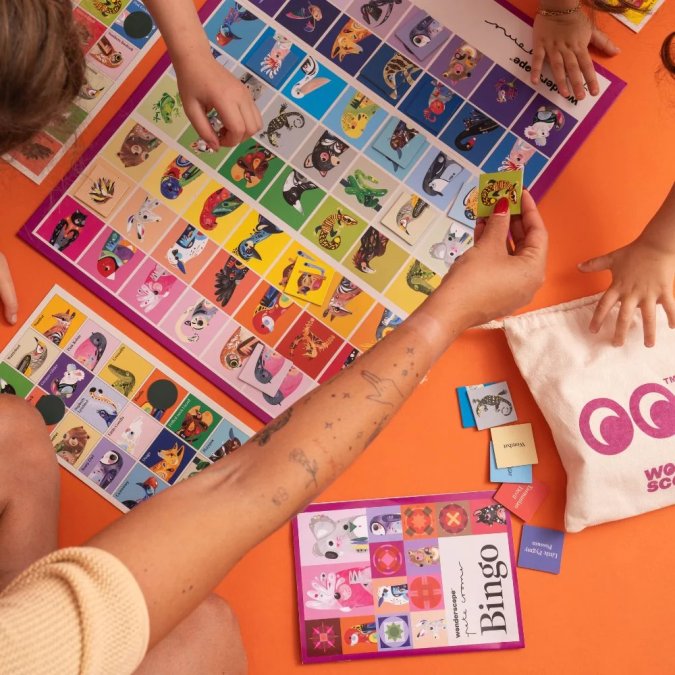
The sound puzzle teaches animal recognition and vocabulary without feeling like a lesson, the activity spiral builds fine motor control through repetition, and the Bush Party jigsaw develops spatial reasoning and patience.

Open Up a Conversation: 50 Questions for Kids and Families to Answer ($35.00) is the one we'd point to for families.
Non-Toy Gifts for Kids Who Already Have Everything
Non-toy gifts for kids solve a problem toys can't: the child who genuinely has enough. When the toy shelves are full, the better move is something that creates a memory.
The Chasing Dreams - Raccoon Plush ($38.50) sits in a middle ground.
Little Dutch Wooden Sound Puzzle - Little Farm →
For a true non-toy option, the Unicorn Snowglobe ($34.95) is a resin and glass piece sized 15cm by 10cm.
Experience gifts are the other route.
Gifts for Kids by Age: A Quick Selection Framework
Use this table as a starting point, then adjust for the individual child.
Age Range |
What They Need |
Good Options |
Price Range |
|---|---|---|---|
12-24 months |
Cause and effect, sound, texture |
Sound Puzzle, Activity Spiral |
$36.95-$59.95 |
2-4 years |
Imaginative play, small hands |
Camper Van, Activity Spiral |
$59.95 |
5-9 years |
Challenge, collecting, independence |
Bush Party Puzzle, Charm Bracelet, Hair Clips |
$9.95-$40.00 |
Any age |
Memory-making, low clutter |
Conversation Cards, Snowglobe, Raccoon Plush |
$34.95-$38.50 |
A simple rule: the younger the child, the more the gift should do the work. The older the child, the more the gift should let them do the work.

Safety, Suitability and Low-Clutter Choices Parents Appreciate
Safety and suitability matter more than novelty. A gift that isn't right for the child's stage creates work for the parents, not joy for the child.
How to Read an Age Rating Properly
An age rating on a toy is not a measure of how clever the child is. It's a safety statement, usually driven by one of three things:
- Small parts. Under-threes mouth everything, so anything that fits inside a small-parts cylinder is a choking risk for that age group. This is why a charm bracelet, an elastic bracelet or a set of hair clips is fine for a child over three but should never be handed to a toddler.
- Materials and finishes. Paints, dyes and plastics used on children's products are expected to meet established safety limits. If a listing doesn't state what a product is made from, treat that as a gap, not a detail.
- Mechanisms. Magnets, button batteries, cords, hinges and folding parts each carry their own risk profile. Button batteries in particular are a serious hazard if swallowed, which is why battery compartments on well-made toys are screwed shut rather than clipped.
In practice, the ratings on the items in this guide line up with those rules: the sound puzzle is listed for 12 months and up, the camper van suits 18 months and up, and the jewellery and hair accessories are safe for children over three.
Match the Gift to the Youngest Child in the House
If the birthday child is six and there's an 18-month-old at home, the practical move is a gift that works for both: a chunky wooden puzzle, a soft plush tied to a book, or a decorative piece that lives on a shelf out of reach. Save small-parts presents for a household with no younger children.
Supervision, Not Just Selection
Some gifts need an adult in the room: water play, sand, craft kits with scissors or glue, and anything with a long cord.
A useful habit: before you buy, ask yourself what the gift looks like on a rainy Tuesday afternoon when the parent is cooking dinner. If the answer is "a supervised project," that's fine, as long as everyone knows it.
Low-Clutter Gifts Parents Quietly Thank You For
Low-clutter gifts take up a defined amount of space and don't multiply. A puzzle, a piece of jewellery, a set of conversation cards or a snowglobe all fit. A large plastic set with dozens of loose pieces usually does the opposite.
There are three useful categories to think in:
- Reusable and durable. Wooden toys, puzzles, jewellery and plush that survive being handed down to a younger sibling.
- Consumable. Craft supplies, art materials and activity books that get used up and then leave the house.
- Experience-based. A museum pass, a zoo visit or tickets to a show create a memory and take up no shelf space at all.
If you want a gift that respects both the child and the household, pick from one of those three and skip anything that arrives in a box bigger than the toy inside it.
What to Ignore When Buying Unique Presents Online
Buying unique presents online comes down to a short list worth checking and a longer list worth ignoring.
Ignore the "trending" label. It changes weekly and tells you nothing about the child. Ignore the biggest box. Size is a marketing signal, not a quality one.
What's worth checking:
- Age suitability stated on the listing, not assumed from the picture
- Materials and any safety testing the seller lists
- Whether the gift needs batteries, and which size
- Delivery time, if the birthday is close
- Whether the seller offers wrapping, so you're not doing it the night before
We keep our range small on purpose. Every item is chosen to suit a specific stage, so we can tell you exactly who each one is for.
Frequently Asked Questions
What are some unique presents for children under ten?
Look for gifts that combine an activity with a lasting keepsake rather than a single-use toy. A wooden sound puzzle teaches animal names and shapes while children play, and a family conversation card set turns dinner into a shared game. Charm bracelets, snowglobes and plush companions work well as keepsakes a child can grow with. Matching the gift to the child's current obsession, whether that is farm animals, fairies or roller skates, makes it feel personal.
What is a good present for a child who already has lots of toys?
Non-toy gifts for kids solve this problem best. Conversation card sets, charm jewellery and experience outings take up almost no floor space but still give the child something to look forward to. If you want a physical gift, choose something consumable or collectible rather than another large playset. A small plush friend or a bracelet in the child's favourite colours feels personal without adding to the pile of plastic already in the toy room.
How do I choose an age-appropriate gift for a child under ten?
Start with the age guidance on the product itself, then check it against the child's actual stage. A wooden sound puzzle is listed for 12 months and up, while a 1000-piece jigsaw suits ages 12 and up, so it fits older siblings better than a five-year-old. For children aged two to four, look for chunky pieces and no small parts. For five to nine, choose gifts with a clear challenge or skill to build.
What are thoughtful non-toy gifts for children?
Non-toy gifts work well when they create a memory or a routine. A set of 50 family questions can be used at the dinner table, in the car or before bed, so the gift keeps giving long after the wrapping comes off. Experience gifts such as a museum pass, zoo visit or concert ticket also fit here. For something smaller, charm bracelets and hair clips are worn rather than stored, which parents tend to appreciate.
How can I pick a gift for a child with very specific interests?
Match the theme, not just the category. A child who loves animals will get more from a farm-themed sound puzzle or an Australian wildlife jigsaw than from a generic building set. A child into dress-up and sparkle will use a fairy charm bracelet or roller skate hair clips far more than another board game. Ask the parent what the child is currently obsessed with, then pick the item in that theme.